
Science laboratories
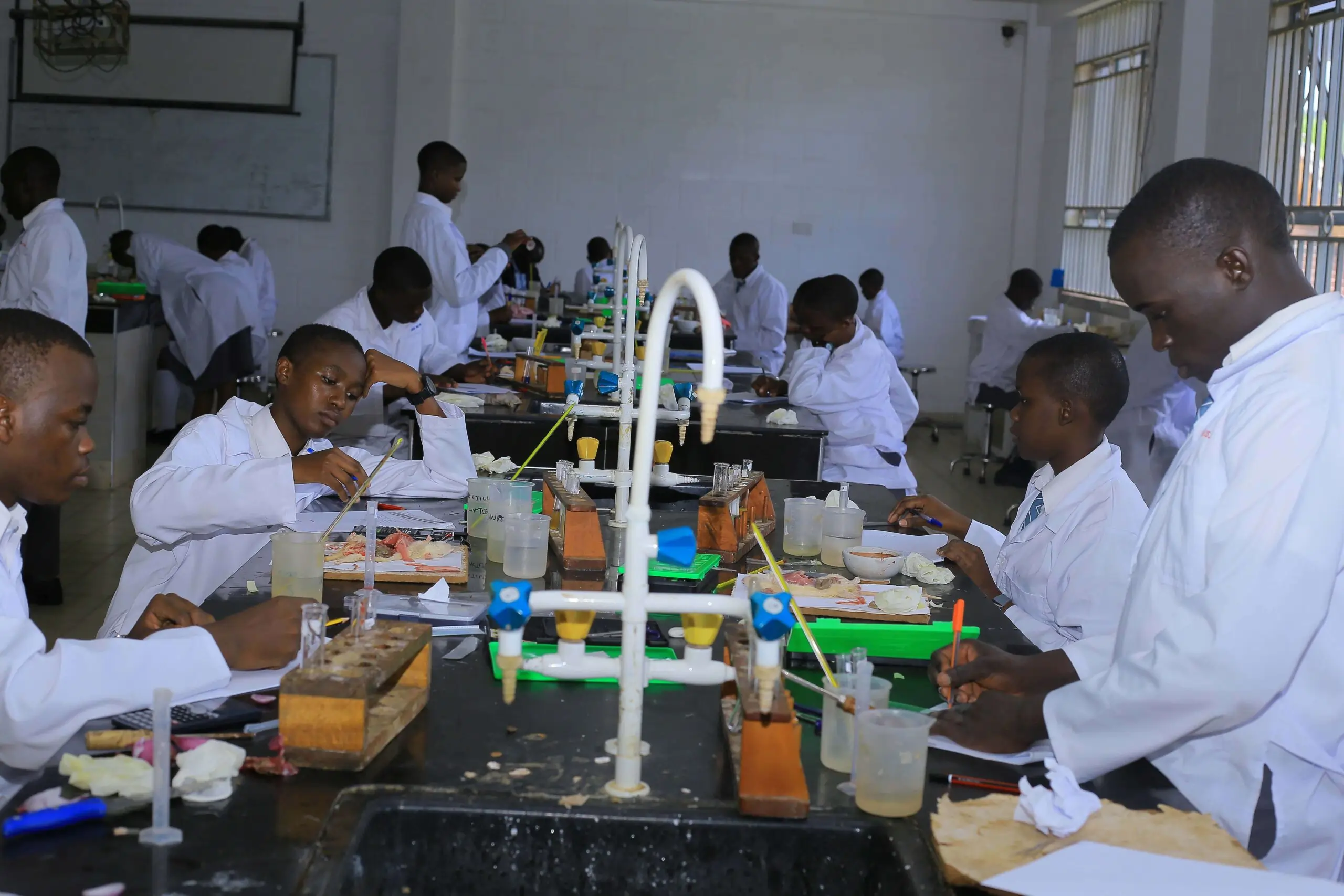
Biology, Chemistry and Physics are taught with regular practical work in our laboratories. Students handle real specimens, chemicals and apparatus at both O Level and A Level, so the UNEB practical papers hold no surprises.
Applications are open for Senior 1, Senior 5 and transfer students.
Learning science by doing it
Our laboratories are working rooms, not display rooms. They hold the specimens, chemicals, glassware, dissection kits and physics apparatus that the UNEB syllabus asks for, and students use them as a normal part of their science lessons.
UNEB tests practical skills in every science subject. A student who has carried out experiments many times will recognise the task in the exam and know how to set it up, record results and explain them.
Practical work also builds good habits: careful observation, honest recording and asking why when a result is not what was expected.
The three sciences
Taught at O Level (Senior 1 to 4) and A Level (Senior 5 and 6).
Biology
Students work with preserved specimens, microscopes, prepared slides and dissection kits. They look at cells, plants, animals and small organisms directly, not only in diagrams.
Chemistry
The laboratory has the chemicals, glassware and titration apparatus for O Level and A Level work: acids and bases, titrations, tests for unknown substances and organic chemistry.
Physics
Meters, circuit parts, lenses, prisms and mechanics apparatus let students measure and test what they learn in class, from current and resistance to the bending of light.
Agriculture
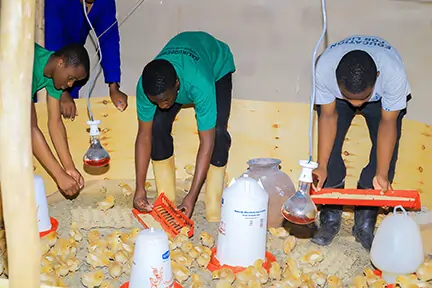
Agriculture is taught through field work and real specimens. Students study plant health and pests, look after the school poultry unit, and work with soil and crops on the school grounds.
More about practical science
- 1ChemicalsAcids, bases, salts and indicators for O Level and A Level work, stored safely, clearly labelled and topped up during the year.
- 2Biological specimensPreserved animals and plants, prepared microscope slides and dissection kits for the UNEB Biology practicals.
- 3Physics apparatusAmmeters, voltmeters, lenses, prisms, metre rules, masses and other apparatus for the experiments in the syllabus.
- 4GlasswareBeakers, flasks, measuring cylinders, test tubes, burettes and pipettes. Broken items are replaced so the next class is not short.
- 5Safety firstLab coats, goggles, gloves and first aid materials. Safety rules are taught in the first practical lesson and apply to every class.
- 6A teacher in every sessionPracticals happen at timetabled times with the subject teacher present. Students follow the procedure, record what they see and write up their results.
- 1Senior 1 and 2Students start with the basics: using apparatus safely, observing carefully and recording results. Biology, Chemistry and Physics are taught as separate subjects from Senior 1.
- 2Senior 3 and 4Practical work follows the UCE syllabus closely, with the kinds of experiments that appear in the exams.
- 3School-based assessmentUnder the new curriculum, work done at school, including practical activities, counts towards the final UCE result. Doing practicals well matters.
- 4Lab rulesStudents learn how to handle chemicals, glassware and specimens safely. A student who does not follow the rules is stopped for that session, as in any real laboratory.
A Level science students take two or three science subjects as part of their combination. Practical work goes deeper and prepares them for the UACE practical papers.
- Biology: more advanced dissection, microscopy, ecology sampling and genetics work.
- Chemistry: volumetric analysis, organic reactions and identifying unknown substances.
- Physics: circuits, optics and measuring physical constants, with students planning and analysing their own experiments.
- UACE practical papers: students sit them having handled the same kind of apparatus many times before.
- 1Plant health and pestsStudents study real plants to spot disease, pest damage and poor nutrition, and learn to identify common crop pests.
- 2PoultryStudents take part in running the school poultry unit: feeding, housing, keeping birds healthy and production.
- 3Soil and cropsSoil tests and field work on the school grounds connect class lessons to real growing conditions.
- 4UNEB practicalAgriculture has a practical assessment, so regular hands-on work prepares students for it.
- 5A skill for lifeUganda is a farming country. What students learn about soil, crops and animals is useful whatever career they choose.
Biology
- Medicine and surgery
- Nursing and midwifery
- Pharmacy
- Medical laboratory science
- Dentistry
- Public health
Chemistry
- Chemical engineering
- Pharmaceutical science
- Food science
- Environmental science
- Industrial chemistry
- Research
Physics
- Civil engineering
- Electrical engineering
- Mechanical engineering
- Telecommunications and ICT
- Architecture and surveying
- Energy
Biology and Chemistry
- Veterinary medicine
- Agricultural science
- Biochemistry
- Nutrition
Agriculture
- Agricultural engineering
- Crop science
- Animal production
- Agribusiness
All sciences
- Science teaching
- University research
- Government science roles
- Science writing
Places for 2027
Apply for Senior 1 or Senior 5, or come and see the laboratories for yourself.